

A Childhood Lived on Camera
There was a time when childhood existed mostly in memory — blurry photographs, home videos played once a year, stories retold at family gatherings.
Today, childhood lives online.
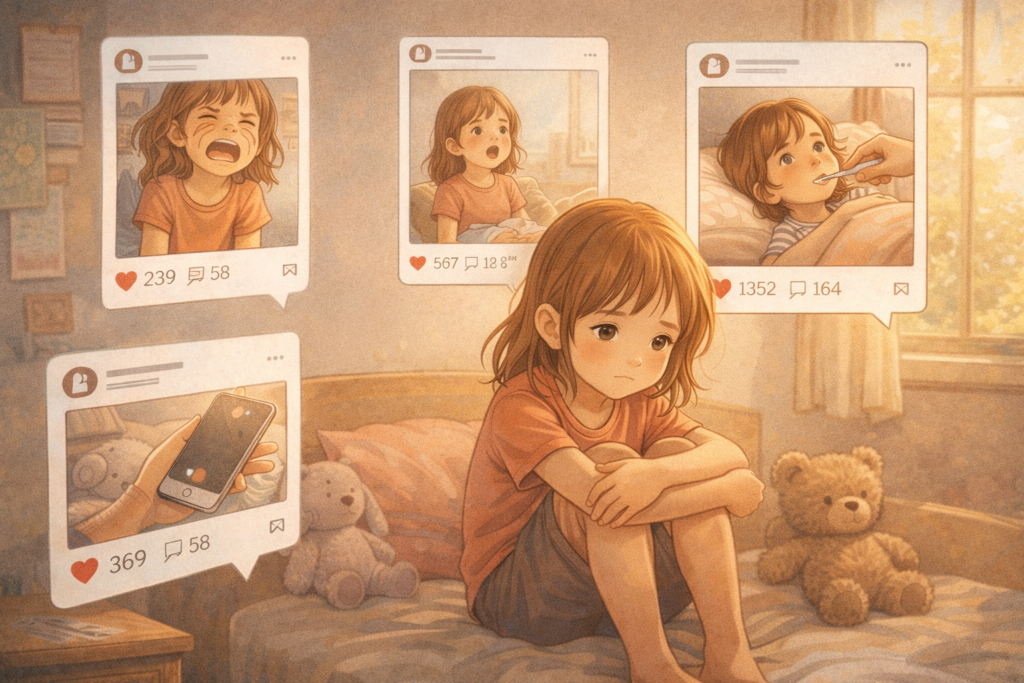
From pregnancy announcements to first steps, tantrums, report cards, vacations, illnesses, and daily routines — many children now grow up with their lives documented, captioned, and shared before they can even speak.
What started as sharing joy has quietly become turning childhood into content.
And we are only beginning to understand the cost.
The Rise of the “Sharented” Child
“Sharenting” — parents sharing details of their children’s lives online — is now normalized. Social media rewards visibility, relatability, and emotional storytelling. Parents are encouraged (often unintentionally) to post more intimate moments because they perform well.
But here’s the uncomfortable truth:
Most children growing up today have a digital footprint they did not consent to.
Their images, emotions, struggles, and identities are being shaped publicly long before they understand what privacy even means.
What Are We Really Sharing?
It’s not just cute photos.
Parents often share:
Meltdowns
Embarrassing moments
Medical updates
Behavioral challenges
School struggles
Emotional breakdowns
While these posts may be shared with love or humor, they become permanent digital records.
Once posted, they are:
searchable
downloadable
archivable
context-free
And children grow into teenagers and adults who must inherit this digital past.
The Psychological Impact We Don’t Talk About
Children develop their identity through autonomy, privacy, and experimentation.
When their life is documented publicly:
mistakes feel permanent
embarrassment becomes amplified
self-image gets shaped externally
validation comes from likes, not self-worth
Some children grow up feeling observed instead of understood.
They learn that moments aren’t lived — they’re performed.
When Likes Start Replacing Boundaries
Social platforms reward engagement, not ethics.
The more emotional or dramatic the content, the more attention it receives. This creates a dangerous feedback loop where:
private moments become public currency
children’s vulnerability becomes engagement fuel
parents unintentionally overshare
In extreme cases, children become brands before they become people.
Digital Footprints Last Longer Than Childhood
A child may forget a moment.
The internet will not.
By the time today’s children reach adulthood:
employers may search their name
peers may find old content
strangers may know intimate details
AI systems may index their childhood data
This isn’t about fear — it’s about foresight.
The Question of Consent
Consent requires:
understanding
choice
the ability to say no
Children cannot give informed consent about:
long-term visibility
data permanence
future consequences
So parents must act as guardians of their digital identity, not just their physical safety.
Does This Mean “Don’t Share at All”?
Not necessarily.
The conversation isn’t about banning sharing — it’s about mindful sharing.
Before posting, ask:
Would my child be okay with this at 16?
Does this protect their dignity?
Am I sharing for connection or validation?
Is this moment private, not public?
Sometimes love means choosing not to post.
Raising Kids With Digital Dignity
Protecting children online isn’t just about screen limits.
It’s also about:
respecting their privacy
modeling healthy boundaries
teaching consent early
valuing presence over performance
When children feel respected offline, they learn to protect themselves online.
A Final Reflection
Childhood should be a place of safety, exploration, and forgiveness — not an archive.
One day, children will look back and ask:
“Did my parents protect my story?”
The most loving answer isn’t always a post.
Sometimes, it’s silence.
No Comments